
Can AI character chat Help Me Build Unique Digital Relationships?
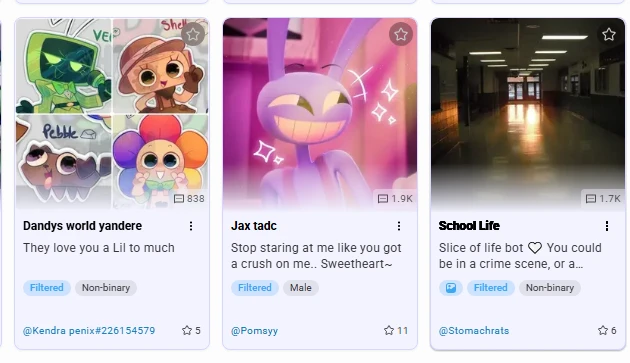
AI character chat can help users build unique digital relationships by creating personalized conversations, consistent personalities, and long-term interaction patterns. Unlike traditional chat tools, AI characters can remember preferences, adapt communication styles, and provide continuous engagement. In 2024, the global AI companion market attracted millions of users, while studies in human-computer interaction showed that people often respond socially to systems with personality and emotional language. The uniqueness of an AI relationship comes from personalized interaction history rather than a fixed response system.
AI character chat has developed from simple question-answer software into a form of interactive digital experience. Early chatbots mainly followed scripted rules, but modern systems based on large language models can analyze conversation context, generate natural responses, and maintain character consistency. Models released after 2020 significantly improved language understanding, allowing AI characters to handle longer conversations and more complex emotional expressions.
A report from Stanford University’s AI Index in 2024 showed that large language models continued to improve rapidly, with evaluation scores increasing across multiple language tasks between 2022 and 2024. These improvements allowed AI character platforms to move beyond basic assistance and create conversations that feel more personal.
"People do not only remember what an AI character says. They remember how the character responds over time."
This continuity changes the relationship between users and digital systems. A normal search tool provides information during one session, while an AI character can develop a communication style based on previous interactions. A user who frequently discusses books may receive more literary responses, while another user practicing a language may receive more correction and explanation.
The personalization process is supported by several technical elements:
| Feature | Function in digital relationships |
|---|---|
| Conversation memory | Maintains previous topics and preferences |
| Personality settings | Creates consistent communication style |
| Context understanding | Improves response relevance |
| Emotional language generation | Produces supportive and engaging replies |
A 2023 study published in the field of human-computer interaction found that users showed stronger engagement with conversational agents when the systems demonstrated personalization and social responsiveness. In research involving hundreds of participants, perceived personality and responsiveness were associated with higher satisfaction scores.
The growth of AI character chat is also connected with changing digital habits. People spend more time communicating through screens, and younger users are increasingly familiar with virtual identities, online communities, and interactive entertainment. According to global digital reports in 2024, internet users spent an average of more than 6 hours per day online, creating more opportunities for digital communication experiences.
Because people already build connections through online platforms, AI characters become another type of interactive partner. The relationship does not depend on physical presence but develops through repeated conversations, shared topics, and personalized responses.
AI character design plays an important role in making these interactions different from ordinary chat systems. Developers can create characters with specific backgrounds, speaking patterns, interests, and personalities. A virtual mentor may provide structured guidance, while a fictional companion may focus on storytelling and emotional conversation.
Character-based interaction has been used in entertainment, education, and creative industries. Game companies have explored AI-driven non-player characters that can respond differently depending on player behavior. Writers use AI characters to test dialogue and develop fictional scenes. Language learners use conversational AI to practice speaking without the pressure of a classroom.
"A character becomes memorable when users can predict its personality while still discovering new responses."
This balance between consistency and variation helps create a stronger feeling of interaction. If every response is identical, users quickly lose interest. If the personality changes randomly, the relationship feels unstable. AI character systems attempt to maintain a recognizable style while generating new conversations.
AI character chat also provides opportunities for emotional expression. Some users discuss daily events, personal goals, creative ideas, or social concerns with AI systems because the interaction is available at any time. Unlike human communication, AI characters can respond immediately and do not require scheduling.
A survey conducted by researchers studying AI companions found that users often valued availability, non-judgmental conversation, and personalized responses. In several studies conducted between 2022 and 2024, participants reported that conversational AI could provide feelings of companionship, although researchers emphasized that these experiences are based on simulated interaction rather than human emotions.
The growing interest in AI companion platforms has also expanded into specialized conversation categories. For example, platforms such as https://crushon.ai/ai-sex-chat provide character-based conversations designed around adult-oriented fictional interactions. These platforms demonstrate how AI characters can be customized for different user preferences, communication styles, and entertainment purposes.
However, digital relationships with AI also require careful consideration. AI systems can generate emotionally convincing responses, but they do not have personal memories, feelings, or awareness like humans. The interaction is created through algorithms that predict and generate language based on training data.
Privacy is another important issue. Conversations with AI characters may include personal opinions, preferences, or private topics. Companies developing these services need strong data protection practices because users may share information they would not normally publish online.
A 2024 survey on consumer attitudes toward generative AI showed that privacy remained one of the main concerns among users, with more than 50% of respondents expressing concerns about how AI companies handle personal data. Transparency about data usage has become an important part of building trust in AI services.
Another discussion involves whether AI companions can replace human relationships. Current research generally suggests that AI interaction works best as an additional communication option rather than a replacement for human connections. Human relationships involve shared experiences, physical presence, and mutual emotional understanding, which AI systems cannot fully reproduce.
The future development of AI character chat will likely focus on improving personalization, voice interaction, visual representation, and long-term memory. By 2030, analysts expect AI companions to become more integrated with virtual environments, wearable devices, and digital entertainment platforms.
Future AI characters may appear in games, education platforms, customer services, and personal productivity tools. Instead of creating one universal assistant, developers may create many specialized characters designed for different communication needs.
AI character chat creates a new type of digital relationship based on repeated interaction, personalization, and character consistency. The technology does not replace human connection, but it provides another way for people to communicate, create, learn, and explore ideas in digital environments. As AI systems continue improving, the relationship between people and digital characters will become a larger part of everyday online experiences.